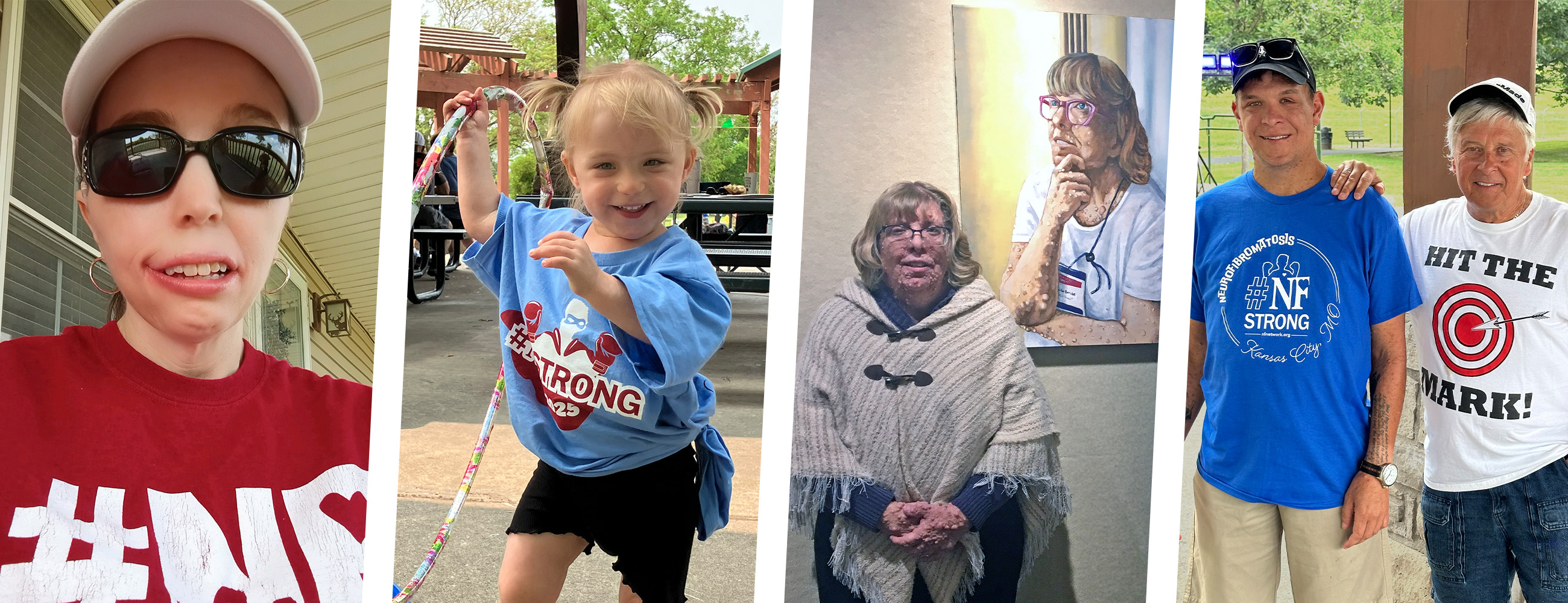
NF looks different for everyone.
Because symptoms of NF are extremely variable, NF Central Plains strongly recommends that patients seek care from providers with NF expertise, preferably at an NF Clinic.
NF type 1 (NF1)
NF1 is the most common type of neurofibromatosis, affecting approximately 1 in 2500 births. Symptoms are usually apparent in childhood. Findings may include:
- Café-au-lait spots — coffee-colored akin spots and freckling in the underarm and groin areas
- Lisch nodules — tiny nodules on the iris of the eye, not affecting vision
- Neurofibromas and plexiform neurofibromas — tumors on the nerves
- Optic gliomas — tumors on the optic pathway
- Increased risk for certain cancers (e.g., breast cancer, malignant nerve sheath tumors)
- Learning disabilities and developmental delays — ADHD, autism and lack of social skills
- Bone development issues — scoliosis and long-bone curvature
- Hypertension and blood vessel abnormalities
NF2-related schwannomatosis (NF2-SWN)
NF2-SWN affects about 1 person in 60,000. Symptoms usually appear in teen years or early adulthood. Findings may include:
- Tumors (vestibular schwannomas) along hearing/balance nerves, typically leading to hearing loss, deafness and balance problems
- Schwannomas on nerves throughout the body and other tumors on the brain and spine
- Vision issues (cataracts or other eye anomalies)
Non-NF2 schwannomatosis (SWN)
Schwannomatosis is the least common form of NF and affects approximately 1 in 100,000 adults. Symptoms rarely appear before adulthood. Findings may include:
- Benign tumors (schwannomas) occurring most often on spinal or peripheral nerves
- Chronic nerve pain, not always related to a specific tumor
Learn More
For more in-depth information about each type of NF, visit the NF Network website.